


The Course “Awakening New Vitality” – The Story of Ms. Thân Tiến
The “Community Health” course by Hypnosis Specialist Nguyễn Mạnh Quân
Here is the exact English translation of your text, with original length preserved, additional context, and reference links added as requested.
---
One Sunday at the beginning of January, at a health workshop, I met Mr. Nguyen Huu Hiep – Director of Vietnam Kangen Water Co., LTD. Through talking with him, I learned that he was about to attend the "Community Health – Course 1" organized by Master's degree holder and Hypnosis Expert Nguyen Manh Quan. Because my older brother was seriously ill at the time, and because I trusted Mr. Hiep's recommendation, I asked him to help me register to meet Mr. Quan.
After two registration attempts, I met Mr. Quan at 2:00 PM on Wednesday, January 9th. I expressed my desire to learn for personal development, to serve my work, and to gain more understanding of health care methods. Mr. Quan said the class roster was already finalized, but in the end, he agreed to let me participate. I consider that a very special opportunity.
On the opening day, I witnessed something that surprised me: some people arrived late to register, but Mr. Quan still maintained his principles regarding time and class size. The course did not simply accept more people just because they came. This gave me the feeling that this was not just an ordinary course, but a program organized with limits, selection, and serious preparation. According to the original article, the "Community Health" course had about 50 students and guests, with attendance from a UNESCO representative and students from many regions across the country.
Three days of learning with a large volume of knowledge
Over the three days of the course, what impressed me most was Mr. Quan's teaching energy. He didn't just lecture; he seemed to live fully in each session. During breaks, he still walked around checking on students, sharing more with each group, answering questions, analyzing situations, and adding very practical knowledge.
His lectures were fast, passionate, easy to understand, and always connected to direct experience. Theory did not stand alone as dry concepts. Each topic was linked to the body, emotions, behavior, stress, illness, communication, work, and daily life. In the class, some came to learn health care methods; some were suffering from severe stress; some carried deep pain, illness, or mental deadlock. The class atmosphere was therefore serious, emotional, and full of practice energy.
From a modern scientific perspective, this is very noteworthy. A mind-body health program not only transmits knowledge but also creates an experiential environment. This environment can influence expectations, emotions, focus, feelings of safety, and the learner's readiness to practice. In research on stress and relaxation, the practice context, guidance, and ability to self-observe are all factors that can influence experiential outcomes.
Stress – a silent but not small problem
One of the most memorable topics was about stress. Mr. Quan explained that many health problems do not appear randomly. They can be related to suppressed emotions, prolonged pressure, fears, melancholy, resentment, or tension that the body has carried for a long time.
In class, Mr. Quan used the image of "the root system of stress" to help students understand that some problems are not on the surface. A pain, a state of fatigue, a sleep disorder, a feeling of heaviness, or a bad habit is sometimes just the tip of the iceberg. Beneath can be a whole system of neurological, endocrine, emotional, and memory responses.
Modern science also views stress as a whole-body response. When stressed, the body can activate the sympathetic nervous system and the hypothalamic-pituitary-adrenal (HPA) axis, altering stress hormones, heart rate, blood pressure, muscle tension, sleep, and immune function. Short-term stress can help humans cope with danger, but long-term stress can create a burden on the body and affect mind-body health.
The concept of the relaxation response is described by NCCIH as a state opposite to the stress response, often accompanied by slower breathing, lower blood pressure, and reduced heart rate. Techniques such as slow breathing, muscle relaxation, guided imagery, self-hypnosis, and biofeedback are all classified as techniques that can help the body enter the relaxation response. (NCCIH) [https://www.nccih.nih.gov/health/relaxation-techniques-what-you-need-to-know]
Hypnosis is not magic
An important aspect of the course was that Mr. Quan did not present hypnosis as a mystical miracle. Hypnosis was explained as a special state of mind: more relaxed, more focused, more receptive to positive suggestions, and capable of working more deeply with images, emotions, memories, beliefs, and body responses.
This understanding is very different from the image of hypnosis in movies. A person in a hypnotic state is not unconscious or controlled. In therapeutic applications, hypnosis requires cooperation, consent, and active participation from the person being guided.
NCCIH states that hypnosis, or hypnotherapy, has been studied in many contexts such as irritable bowel syndrome, anxiety before medical procedures, menopausal symptoms, headaches, PTSD, pain management, and smoking cessation. NCCIH also notes that there is growing evidence that hypnosis can support the management of certain pain conditions, although the quality of evidence and level of recommendation vary by condition. (NCCIH) [https://www.nccih.nih.gov/health/hypnosis]
This helps learners understand more accurately: hypnosis is not "magic," nor is it a substitute for medicine in all cases. It is a method of working with attention state, suggestion, emotion, and mind-body responses; when practiced correctly, it can play a supportive role in health care, emotional regulation, and behavior change.
EFT – acupuncture without needles and emotional release
Another topic frequently mentioned in the course was EFT, often called "acupuncture without needles." This method combines focusing on an emotional issue, using a setup phrase, and gently tapping on certain points on the body. In class, EFT was introduced as a technique to help release negative emotions, reduce stress, process fears, obsessions, and mind-body responses related to prolonged pressure.
What impressed students was that the techniques were not just discussed theoretically. Mr. Quan explained the principles, then guided direct experience. Many students observed or felt changes in their bodies: tension decreased, breathing became calmer, emotions felt lighter, fear or pressure reduced in intensity.
Scientifically, EFT remains an area requiring careful research. Some people experience clear effects, but the mechanism may come from a combination of multiple factors: focusing attention on emotion, naming the problem, gentle exposure to memories or fears in a safe environment, regulating breathing, rhythmic tapping on the body, self-talk, and positive expectation. Therefore, when applying EFT, it should be seen as a method to support emotional and stress regulation, not a replacement for medical diagnosis or treatment for serious conditions.
The placebo effect and the power of expectation
In the course, Mr. Quan also discussed the placebo effect. This content made me think a great deal, because it shows that belief, expectation, and therapeutic context can influence body perception.
The placebo effect does not mean "fake illness" or "imagination." In medicine, placebo demonstrates that expectation and treatment context can produce real responses in subjective experience, especially in areas such as pain, anxiety, fatigue, or symptoms strongly influenced by the nervous system. Harvard Health describes placebo as a phenomenon in which the brain can convince the body that a treatment is real, thereby activating beneficial responses; this effect is not just simple positive thinking but involves the relationship between brain, body, expectation, and experience. (Harvard Health) [https://www.health.harvard.edu/mental-health/the-power-of-the-placebo-effect]
This helps explain why, in mind-body care, words, beliefs, safety, trust in the guide, and emotional state can strongly influence practice outcomes. But precisely for this reason, practitioners must act ethically: not instilling fear-based suggestions, not over-promising, not creating dependency in learners, and not advising them to stop medical treatment without a doctor's recommendation.
Body language and communication psychology during breaks
One interesting thing was that even break times became learning opportunities. Once, while drinking water, Mr. Quan asked us: "In presentations, when starting to walk out to greet the audience, why do speakers raise both hands forward?" From a small question, Mr. Quan analyzed body language, how to create a sense of openness, safety in communication, and non-verbal signals.
When he learned that I work as a valuation appraiser but am passionate about life insurance, Mr. Quan asked me to analyze the factors affecting "value," then used my own answer to expand into a psychological perspective. I realized that his knowledge is not limited to hypnotherapy but extends broadly into sales psychology, presentation skills, communication, behavior observation, and how people make decisions.
Body language can be seen as the external expression of internal state. When a person is stressed, their breathing is shallow, shoulders tight, eyes avoidant, voice may tremble or be rushed. When a person is calmer, their body is more open, gaze more stable, speech rhythm clearer. Therefore, learning body language is not about "performing" but about recognizing states, adjusting oneself, and communicating more responsibly.
The major content delivered in three days
In just three days, Mr. Quan shared many real stories, many metaphorical stories, many therapeutic examples, and many lessons to help students remember easily and relate to daily life. Some of the content noted in the original article includes: the mechanism of stress; the relationship between stress, weight gain, and health; stress and cardiovascular disease; the placebo effect; EFT; self-hypnosis; brain training; training of essence – energy – spirit; exercises for pregnant mothers; pain reduction; eliminating fears; processing negative emotions; knowledge about hormones; and exercises to help the body become healthier and more comfortable.
Viewed from a scientific perspective, this content can be reduced to a common thread: body and mind are not separate. Emotions affect the body. The body affects emotions. Beliefs affect behavior. Repeated behavior forms habits. Prolonged stress can disrupt sleep, eating, aches, and work performance. Relaxation, awareness, self-regulation, and consistent practice can help people increase their resilience.
When students felt "it couldn't be better"
In my group, I met many people who had previously taken courses on hypnosis, NLP, or personal development. Some had registered for long programs with high costs. Some had traveled from the South to Hanoi for the chance to participate. Some came for health, some for work, some to understand a field still very new in Vietnam.
After the course, our common feeling was that the value received far exceeded initial expectations. Mr. Quan once said that what he shared in this course was only "the small leaves on the branch," but for us, even that much was enough to open up many new perspectives on health, psychology, the body, emotions, and the human capacity for self-regulation.
UNESCO's presence and community significance
At the end of the course, according to the original article, a UNESCO representative gave commemorative gifts and thanked Mr. Quan for sharing his knowledge, while expressing support for the mission of helping the community. The course ended, but many students stayed behind to listen to Mr. Quan share more.
This shows that the community's need for mind-body health care methods is very large. In modern society, people not only need medicine and medical intervention when sick; they also need knowledge to prevent stress, regulate emotions, sleep better, understand their bodies better, communicate better, and live more mindfully.
From personal experience to practical value
After the course, I felt I could immediately apply some of the knowledge I had learned. I thought about helping a friend quit smoking, about using the techniques I learned to help a relative reduce stress, and about applying communication psychology in my work.
The most important thing I realized is: only by truly participating, experiencing, and feeling with my own body – emotions – awareness can we somewhat understand the value of the method. Before, I also had doubts. But after three days of learning, those doubts were replaced by direct experience.
Money is precious, but there are values that cannot be measured only by money. Health, understanding, the ability to self-regulate, belief in oneself, and tools to help oneself and loved ones are values very difficult to price.
Scientific and safety note
The experiences in this article are the personal reflections of a student after the course. Each person's results may differ depending on health status, stress level, practice ability, living environment, and post-course maintenance.
Methods such as self-hypnosis, EFT, relaxation, visualization, mind-body practice, and positive suggestion should be understood as tools to support health care, regulate emotions, and improve quality of life. They do not replace medical examination, diagnosis, medication, surgery, emergency care, or medical treatment when necessary. People with serious illness, severe depression, self-harm thoughts, psychosis, acute pain, unstable cardiovascular disease, or those undergoing specialist treatment should consult a doctor before participating in any practice program.
Course information
Related course: Haruva – Igniting a New Vitality
Orientation: Mind-body health, self-hypnosis, EFT, stress reduction, deep relaxation, emotion recognition, non-pharmaceutical health care
Instructor: Hypnosis Expert Nguyen Manh Quan
Suitable for: People who want to learn self-care health methods, relieve stress, stabilize emotions, enhance life energy, and understand the body-mind connection more deeply
Hotline: 0904.606.965
Email: chualanhkhongdungthuoc@gmail.com
References
- National Center for Complementary and Integrative Health (NCCIH). Relaxation Techniques: What You Need To Know. https://www.nccih.nih.gov/health/relaxation-techniques-what-you-need-to-know
- National Center for Complementary and Integrative Health (NCCIH). Hypnosis. https://www.nccih.nih.gov/health/hypnosis
- Harvard Health Publishing. The power of the placebo effect. https://www.health.harvard.edu/mental-health/the-power-of-the-placebo-effect
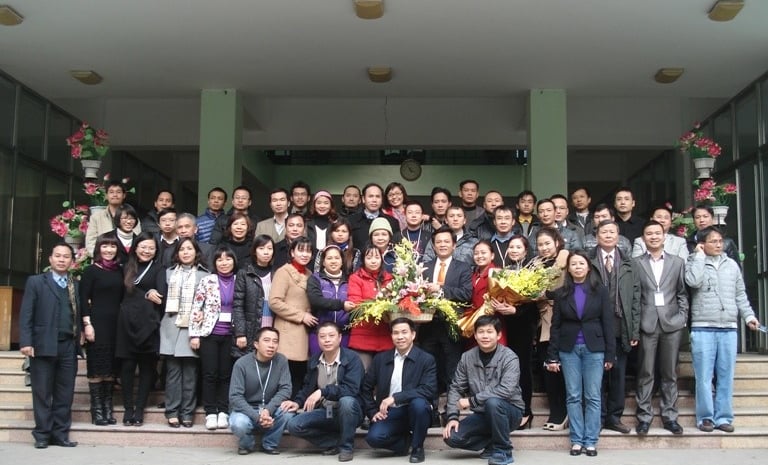
Under the Vietnam Federation of UNESCO Associations, the center trains special methods to improve health, prevent and support treatment of physical and mental issues, and provides training in learning methods, thinking, and applied psychology for communication, business, negotiation, and sales.
© 2026 Trị Bệnh Không Dùng Thuốc. All rights reserved.
Heal your spirit
Contact
Address: Cultural and Sports Center, Yen Phu Ward, No. 1/15, Alley 189 An Duong Street, Tay Ho District, Hanoi.
Hotline: 0904.606.965