



Straightening the Spine in Less Than 2 Minutes
Supporting Spinal Misalignment and Herniated Discs Through Hypnotherapy
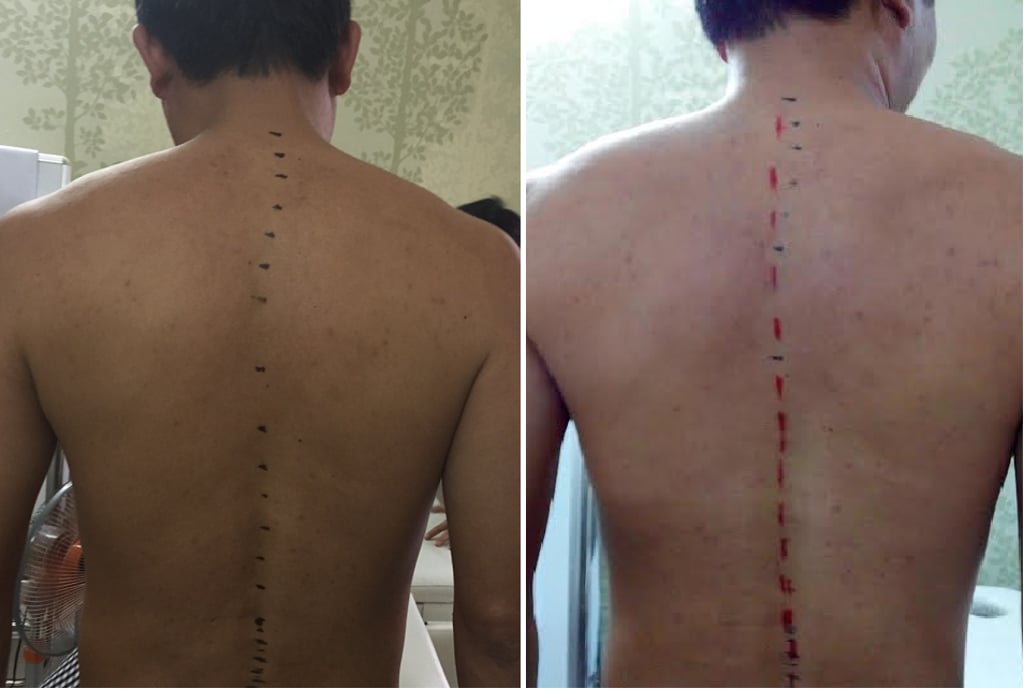
Hypnosis can support the body in returning to a more balanced state through the self-regulating capacity of the nervous system, muscles, emotions, and mind-body responses.
In a training course for level 2/3 therapeutic hypnosis specialists, Therapeutic Hypnosis Expert Nguyen Manh Quan conducted a live therapy session with a client as a demonstration. After a few minutes in a deep hypnotic state, under the influence of specific therapeutic suggestions, the client's body showed clear regulatory responses: the spine area, posture, and body sensations became more balanced.
This experience demonstrates a very noteworthy point: the human body is not a passive system. The body can respond to mental state, breath, emotions, focus, feelings of safety, and appropriate suggestive signals. When the nervous system calms down, muscles relax more, defensive responses decrease, and the person enters a state of deep focus, the body can self-adjust toward greater balance.
Treating disc displacement and vertebral misalignment through words and hypnotic state
In hypnotherapy practice, words are not merely sounds. Words can become signals that affect attention, emotion, internal imagery, body perception, and nervous system responses. When the client trusts, cooperates, and enters a state of deep relaxation, therapeutic suggestions can help them perceive their body differently, release tension, reduce fear of movement, and activate self-regulating responses.
Back pain, herniated discs, postural misalignment, or sciatica are not only related to spinal structure. In many cases, pain perception is also influenced by muscle tension, stress, sleep, fear of movement, pain memories, excessive attention to the painful area, and the nervous system's state of vigilance.
Modern pain science shows that pain is a complex experience. Pain can be related to tissue damage, but it is also influenced by neurology, emotion, cognition, expectation, and context. Low back pain is a common problem that can arise from many causes such as muscle strain, herniated disc, nerve root compression, degeneration, inflammation, injury, or more serious rare causes. (Wikipedia) [https://en.wikipedia.org/wiki/Low_back_pain]
The body's self-stabilizing, self-healing, and self-regulating mechanisms
The body always has self-regulating mechanisms. When injured, the body undergoes tissue healing. When stressed, the body can return to a resting state if properly supported. When in pain, the nervous system can increase or decrease pain perception depending on attention, emotion, and feelings of safety.
In hypnotherapy, the goal is not to "force" the body to change through willpower, but to create conditions for the body to enter a state more conducive to regulation:
- Muscles become relaxed
- Breathing slows and deepens
- The mind focuses on therapeutic signals
- Fear of movement is soothed
- Feelings of safety within the body increase
- Positive suggestions support recovery imagery
- Attention shifts from pain–fear–tension to relaxation–balance–recovery
When these factors occur together, some clients may perceive very rapid changes: pain decreases, the body feels lighter, the back area softens, posture becomes more balanced, or movement becomes easier.
Herniated discs and sciatica need to be properly understood
A herniated disc occurs when the soft inner core of the intervertebral disc bulges or leaks out, potentially irritating or compressing nerve roots. Some people have imaging evidence of herniation but few symptoms; others experience severe pain, numbness, weakness, or pain radiating down the leg. Symptoms depend on the location, degree of nerve compression, inflammatory response, muscle condition, stress level, and how the nervous system processes pain signals. (Wikipedia) [https://en.wikipedia.org/wiki/Herniated_disc]
Sciatica is typically described as pain traveling from the lower back down to the buttock, thigh, calf, or foot. The pain may be accompanied by numbness, tingling, leg weakness, or an electric shock sensation. Lumbar herniated disc is one of the common causes of sciatica. (Wikipedia) [https://en.wikipedia.org/wiki/Sciatica]
Therefore, for cases of herniated disc, disc displacement, cervical spine pain, lumbar spine pain, or sciatica, it is necessary to combine medical understanding with safe mind-body practice. Hypnosis, deep relaxation, EFT, therapeutic suggestion, and stress regulation methods may support pain perception, muscle tension, fear of movement, and mental state, but they do not replace diagnostic imaging, specialist examination, physical therapy, medication, or surgery when truly necessary.
Hypnotherapy and chronic pain
Hypnotherapy is not magic. In the modern understanding, hypnosis is a state of deep focus, reduced external distraction, and increased responsiveness to suggestion when the hypnotized person voluntarily cooperates. This state can be used to support relaxation, pain reduction, habit change, emotion regulation, and working with internal imagery.
In pain management, hypnosis can act through multiple pathways:
- Reducing excessive attention to pain
- Increasing feelings of body control
- Calming anxiety related to pain
- Supporting muscle relaxation
- Changing internal imagery of the painful area
- Reducing fear of movement
- Increasing positive expectations and feelings of safety
Some reviews indicate that hypnosis can support pain reduction in certain conditions, but outcomes depend on the individual, the type of pain, responsiveness to hypnosis, and quality of practice. Therefore, hypnosis should be presented as a supportive mind-body pain management method, not a guarantee of curing all forms of spinal injury. (Wikipedia) [https://en.wikipedia.org/wiki/Hypnotherapy]
"Psychological acupuncture" – releasing emotional blockages and calming the nervous system
In mind-body therapy programs, Expert Nguyen Manh Quan uses a combination of methods such as hypnotherapy, self-hypnosis, EFT, emotional release, positive suggestion, deep relaxation, and nervous system stabilization techniques.
This can be called a "psychological acupuncture" approach in the sense of practice: targeting emotional points, beliefs, memories, tension, and bodily responses that are stuck in the mind-body system. When emotions are suppressed for a long time, the body may manifest through muscle tension, insomnia, pain, fatigue, shortness of breath, restlessness, or feelings of heaviness. When emotions are recognized and released in a safe state, the nervous system can calm down and the body can relax more easily.
Guided imagery techniques, hypnosis, relaxation, and mind-body interventions all focus on the relationship between the brain, body, and behavior, with the goal of using the mind's abilities to positively influence body function and health states. (Wikipedia) [https://en.wikipedia.org/wiki/Guided_imagery]
A practice scene: when the body self-regulates in deep hypnosis
A client enters a therapy session feeling misalignment, pain, tension, and discomfort in the spine area. When standing, the body may tilt slightly; when bending, the back feels tight; when sitting, the lower back is uncomfortable; when thinking about movement, feelings of fear already appear in the mind.
During the therapy session, the client is guided into a state of deep relaxation. Breathing slows. Shoulders drop. Facial muscles soften. Attention gradually drifts away from external noise and returns to internal body sensations.
The therapist begins using therapeutic suggestions: the body is listening, the nervous system is calming down, tense muscle areas are being allowed to relax, the spine is finding its natural balance, the two sides of the body are adjusting more harmoniously.
As the client continues to deepen their focused state, very subtle responses may appear in the body: a deeper breath, a slight tremor in the back area, a shift in posture, a sensation of warmth, lightness, or softness. These responses are not forced. They are signals that the body is participating in the self-regulation process.
After a few minutes, when the client opens their eyes, their body sensations may have changed noticeably: standing straighter, back feeling lighter, pain reduced, or movement easier. This is a mind-body experience that should be understood with caution: it is the client's real-time feedback from a single practice session, not a guarantee that every case will have the same result.
Why can changes happen quickly?
Some mind-body changes can appear quickly because the body changes not only through tissue structure but also through neural state. When pain involves components of muscle tension, fear of movement, stress, excessive attention, or protective responses, simply calming the nervous system can immediately change pain perception and posture.
This does not mean that anatomical injury always disappears within minutes. A herniated disc, spinal degeneration, or structural injury still require medical evaluation. But pain perception, muscle tension, range of motion, and confidence in movement can change when the nervous system changes.
Therefore, rather than saying "cure a herniated disc in 2 minutes," a safer and more scientific understanding is: in some cases, hypnotherapy can help the body reduce pain, reduce muscle tension, improve balance perception, and increase movement ability very quickly through the mechanism of nervous system regulation and mind-body response.
Who might be interested in this method?
This method is suitable for those who want to explore mind-body support for issues such as:
- Back pain due to stress, muscle tension, or prolonged work
- Neck, shoulder, and lower back pain
- Sciatica that has been medically evaluated and needs additional support for relaxation, tension reduction, and fear of movement
- Feelings of bodily misalignment, tension, postural imbalance
- Chronic pain related to stress, insomnia, or emotions
- Those wanting to learn self-hypnosis, EFT, and self-care support techniques
- Those undergoing medical treatment but wanting to safely add relaxation, emotion regulation, and stress reduction methods
When to seek immediate medical attention?
Spinal pain should not be taken lightly if there are warning signs. Patients should see a specialist or seek emergency care if they experience pain after injury, rapidly increasing pain, fever, unexplained weight loss, history of cancer, progressive limb weakness, saddle anesthesia, or loss of bladder or bowel control. These signs may suggest conditions requiring urgent or intensive medical intervention. (Wikipedia) [https://en.wikipedia.org/wiki/Cauda_equina_syndrome]
If already diagnosed with a herniated disc, spinal stenosis, nerve root compression, or severe degeneration, patients should discuss treatment plans, rehabilitation, appropriate movement, and complementary support methods with their doctor.
See also related content
- Lumbar herniated disc treatment: Symptoms, causes, treatment methods, and supportive recovery exercises
- Cervical herniated disc treatment: Manifestations of neck pain, shoulder-neck pain, numb hands, weak hands, and safe management approaches
- Cervical and lumbar spondylosis: Understanding degeneration, chronic pain, movement, posture, and mind-body care
- Sciatica: Common causes, signs requiring medical evaluation, and pain support methods
- EFT and "psychological acupuncture": Emotional release, stress reduction, nervous system regulation support, and pain perception
- Self-hypnosis for chronic pain support: How to bring the body into deep relaxation, increase feelings of safety, and calm pain responses
Scientific and safety note
The content in this article and video represents therapy experiences, practice illustrations, and client feedback in a specific context. Results may vary depending on the individual, spinal condition, cause of pain, injury severity, medical history, hypnotic responsiveness, stress level, and post-therapy practice.
Hypnotherapy, self-hypnosis, EFT, deep relaxation, and emotion regulation may support mind-body health, reduce stress, soothe pain perception, and improve movement state in some individuals. These methods do not replace medical examination, diagnostic imaging, medication, physical therapy, surgery, emergency care, or specialized medical treatment when necessary.
Do not stop medication, abandon treatment protocols, or delay seeing a doctor if you have severe symptoms. Do not perform pain-cutting techniques, needle insertions, spinal manipulation, or spinal adjustments without proper expertise and safety conditions.
Consultation information
Field: Hypnotherapy, self-hypnosis, EFT, deep relaxation, chronic pain support, stress, emotions, and mind-body health
Expert: Nguyen Manh Quan
Hotline: 0904.606.965
Email: nmq.tribenhkhongdungthuoc@gmail.com
References
- Wikipedia. Low back pain. https://en.wikipedia.org/wiki/Low_back_pain
- Wikipedia. Herniated disc. https://en.wikipedia.org/wiki/Herniated_disc
- Wikipedia. Sciatica. https://en.wikipedia.org/wiki/Sciatica
- Wikipedia. Hypnotherapy. https://en.wikipedia.org/wiki/Hypnotherapy
- Wikipedia. Guided imagery. https://en.wikipedia.org/wiki/Guided_imagery
- Wikipedia. Cauda equina syndrome. https://en.wikipedia.org/wiki/Cauda_equina_syndrome
- National Center for Complementary and Integrative Health (NCCIH). Hypnosis. https://www.nccih.nih.gov/health/hypnosis
- National Center for Complementary and Integrative Health (NCCIH). Relaxation Techniques: What You Need To Know. https://www.nccih.nih.gov/health/relaxation-techniques-what-you-need-to-know

Under the Vietnam Federation of UNESCO Associations, the center trains special methods to improve health, prevent and support treatment of physical and mental issues, and provides training in learning methods, thinking, and applied psychology for communication, business, negotiation, and sales.
© 2026 Trị Bệnh Không Dùng Thuốc. All rights reserved.
Heal your spirit
Contact
Address: Cultural and Sports Center, Yen Phu Ward, No. 1/15, Alley 189 An Duong Street, Tay Ho District, Hanoi.
Hotline: 0904.606.965