



New Life Source Program – Course 2 in Hanoi: Memories and Milestones
Reflections on self-hypnosis, sleep improvement, relief from neck and shoulder pain, and overall mind-body well-being.
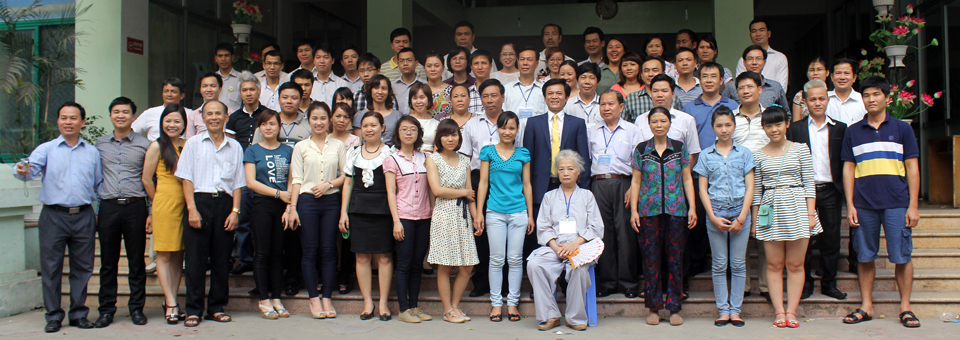
The "Igniting a New Vitality" course, second session in Hanoi, left me with many special experiences. This was the first time I attended a course where learning did not only happen through theory, but through observation, practice, sensing my body, and very real changes in my own life.
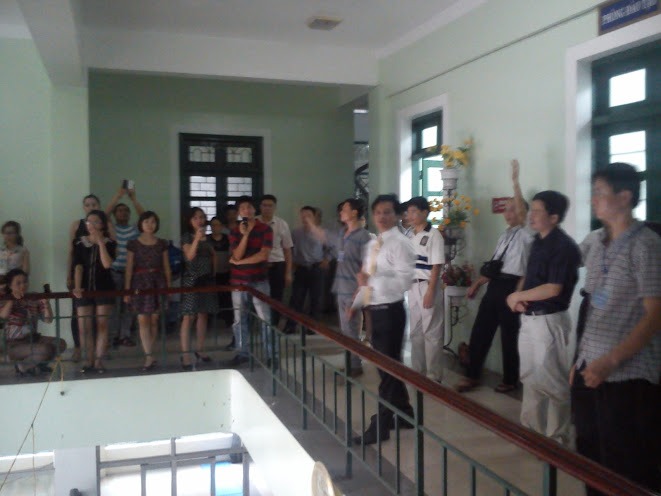
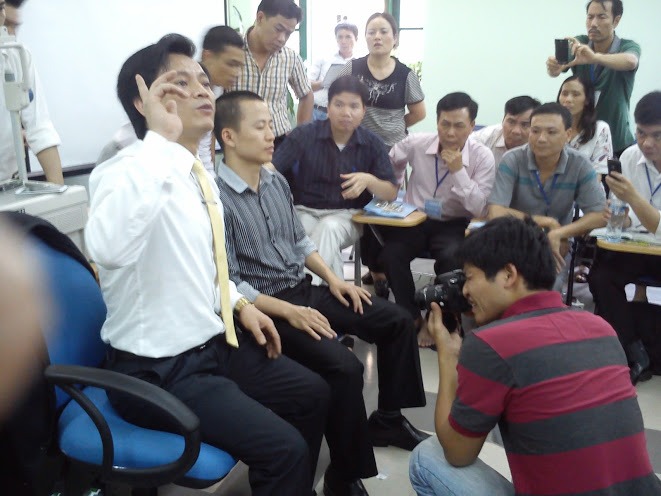
I still remember the moments in class: the photos I took myself, the practice sessions, the students' faces, the moments when the whole class practiced together, and the very sincere sharing stories. It was not just a course, but also a space for connection, where I met many uncles, aunts, brothers, and sisters from different fields: some worked in government agencies, a traditional medicine practitioner from Lao Cai, doctors, journalists, businesspeople, and many students interested in mind-body health.
It was that diversity that made the class very special. Each person came to the course with a different problem, expectation, and personal story; but when practicing together, listening together, and sharing together, we felt like we were stepping into a common journey: learning to understand our bodies better, understand our emotions better, and gaining methods for self-health care.
Two years of insomnia and prolonged fatigue
Before attending the course, I had suffered from insomnia for 2 full years. It was a very uncomfortable feeling: lying down at night but my mind wouldn't rest, body tired but sleep wouldn't come, tossing and turning night after night, waking up with low energy, feeling heavy. I went for check-ups, tried many methods, tested many different approaches, but the results did not truly improve.
Not only insomnia, I also suffered from shoulder and neck pain. Every time I sat at the computer for a long time, my neck-shoulder-neck area became tense, sore, and uncomfortable. My body seemed to always carry a layer of silent tension. When I didn't sleep enough, the aches increased; when the aches increased, sleep became even harder to achieve. And so, insomnia and muscle tension became a loop.
Science about sleep shows that insufficient sleep can affect physical health, mental health, concentration, memory, emotional response, and daytime energy. The NHLBI, part of the NIH, describes sleep deprivation and sleep deficiency as conditions that can affect learning, work ability, reaction time, judgment, and long-term health. (NHLBI, NIH) [https://www.nhlbi.nih.gov/health/sleep-deprivation]
Therefore, for me, being able to sleep again was not a small change. It was the return of life energy.
The first night of good sleep after the second day of class
I was truly surprised that, exactly as previous course students had shared, just after the second day of class, that night I went home and fell into a deep, peaceful sleep. That feeling is very hard to describe for someone who had suffered long-term insomnia. When you are accustomed to sleeplessness, having one night of good sleep becomes a great joy.
After the course, what was even more wonderful was that I learned self-hypnosis methods to bring my body into a relaxed state. I could use the methods I learned to help myself fall asleep more easily, rest more deeply, and feel my body lighter. Exactly as Teacher Nguyen Manh Quan guided, my health gradually improved, my spirit became more comfortable, and inside I felt more peaceful and happier.
From a scientific perspective, relaxation techniques such as slow breathing, visualization, self-hypnosis, muscle relaxation, and autosuggestion can help the body enter the relaxation response. NCCIH describes the relaxation response as a state opposite to the stress response, usually accompanied by slower breathing, lower blood pressure, and reduced heart rate. NCCIH also lists self-hypnosis as a form of relaxation technique, in which the practitioner learns to create the relaxation response using their own cue or signal. (NCCIH) [https://www.nccih.nih.gov/health/relaxation-techniques-what-you-need-to-know]
This helped me understand my experience better: when the body is less tense, breathing calmer, mind less cluttered, and the nervous system no longer in a vigilant state, sleep can come more naturally.
Self-hypnosis: learning to bring the body into a resting state
Before, when I heard about hypnosis, it felt very foreign. But when I learned, I understood that self-hypnosis is not losing control, not deep sleep, nor a mysterious thing. It is a way to direct attention inward, relax the body, calm thoughts, and use positive suggestions to help the body-mind enter a more stable state.
In the course, we were guided through step-by-step practice: calming the breath, relaxing the body, focusing on internal sensations, visualizing a healthy state, and using self-talk to help the body learn to rest. When practiced correctly, self-hypnosis becomes like a key that helps me become more proactive with my sleep.
NCCIH states that hypnosis has been studied in many contexts, including pain, pre-procedure anxiety, irritable bowel syndrome, menopausal symptoms, headaches, PTSD, and smoking cessation; for pain, NCCIH notes there is growing evidence that hypnosis can support the management of certain pain conditions, although the level of evidence varies by condition. (NCCIH) [https://www.nccih.nih.gov/health/hypnosis]
In my experience, the greatest value of self-hypnosis is the feeling of having a tool to return to myself, rather than being completely passive in the face of insomnia, stress, or pain.
Shoulder and neck pain and its relationship with stress
Besides insomnia, my shoulder and neck pain also changed positively after practicing. Before, whenever I sat at the computer, my shoulders and neck would become tense, uncomfortable, sometimes making me lose focus. After the course, when I practiced the exercises the teacher guided, I felt my neck-shoulder-neck area become lighter, my body softer, and less of a pulled-tight sensation.
Shoulder and neck pain can have many causes: posture, movement, muscle-skeletal-joint issues, working at the computer too long, lack of rest, stress, or prolonged muscle tension. For persistent pain, medical examination is needed to rule out serious causes. However, stress and tension can cause muscles to contract, breathing to become shallow, and the body to maintain a defensive state. When relaxed, learners can perceive changes in tense muscle areas.
NCCIH also notes that relaxation techniques may support some types of pain such as post-surgical pain, headaches, low back pain, and arthritis-related pain, although the quality of evidence varies and caution is needed. (NCCIH) [https://www.nccih.nih.gov/health/relaxation-techniques-what-you-need-to-know]
For me, the important thing was that I began to learn to listen to my body: when my shoulders were tense, when my breath was shallow, when emotions were making my body contract, and when I needed to stop and relax.
Pain cutting, needle piercing the hand, and an experience about focus
In class, there was a practice session on "entering a hypnotic state for pain cutting." This was one of the moments that strongly impressed many students. When observing or participating in such experiments, I realized that pain sensation is not just a simple mechanical response but is also related to attention, expectation, emotional state, and how the brain interprets signals from the body.
Modern pain science also emphasizes this. Pain is a real experience, but it does not depend only on tissue damage. The brain plays an important role in modulating, amplifying, or dampening pain perception. Therefore, methods that change attention, relaxation, visualization, and suggestion can influence pain perception in some individuals.
However, pain-related practices need careful guidance, should not be imitated arbitrarily, and should not be used to replace medical treatment. The goal of the class is not to perform pain tolerance, but to help students understand that the body and mind have a much deeper capacity for regulation than we usually think.
Brain training, Qigong, and the power of visualization
In the course, we also practiced brain training exercises, Qigong, and practices related to visualization. I still remember the image of the whole class practicing together, doing the movements together, observing the changes in our bodies after each practice session.
"The power of visualization" was an important lesson. When a person visualizes clearly, emotions and the body can respond according to that image. In sports, learning, therapy, and relaxation, guided imagery is often used to support focus, reduce stress, and create a more positive internal state. NCCIH classifies guided imagery as a relaxation technique; in this technique, the practitioner imagines images, scenes, or events associated with peace and tries to create a similar feeling in the body. (NCCIH) [https://www.nccih.nih.gov/health/relaxation-techniques-what-you-need-to-know]
For me, visualization was no longer just "imagining for fun." It became a way to communicate with my body. When the internal image changed, the internal feeling could also change.
Resolving fears and phobias for friends
One thing that made me very happy was that after the course, not only did I resolve my own issues, but I could also support some friends within appropriate limits. I applied what I learned to help friends deal with fears such as fear of ghosts, fear of heights, fear of snakes.
When working with fear, the important thing is not to deny another person's emotions. Fear is a real response of the nervous system. It can be related to memory, imagination, past experiences, environmental suggestions, or the body's defensive responses. When guided to breathe, relax, name the emotion, change internal images, and approach the fear in a safer state, the intensity of fear may decrease in some people.
However, for severe phobias, panic attacks, trauma, or serious anxiety disorders, support from a psychologist or doctor is needed. Learners should only apply methods within the scope they have been taught, with the consent and safety of the person being supported.
Affection for the class and the student community
What I value is not only the methods but also the affection within the class. Students shared, encouraged, and helped each other. The assistants and collaborators at the Center provided enthusiastic support. Each person came to class with their own story, but when learning together, practicing together, witnessing each other's changes, we became a small, empathetic community.
I thank Mr. Nguyen Huy Duong for sharing his experience and introducing me so I could understand more about the course. I am also grateful to Teacher Nguyen Manh Quan for guiding methods that helped me improve my sleep, shoulder and neck pain, my spirit, and my belief in my body's ability to self-regulate.
From a course to a change in life
After the course, I regularly practice the Qigong movements, brain training exercises, and self-hypnosis that Teacher Quan taught me. I feel my health improving day by day, my spirit more comfortable, and sleep becoming something close rather than a nightly obsession.
The most important thing is that I no longer feel completely helpless before my own body. Before, insomnia and shoulder-neck pain made me think that I could only endure or seek external methods. After the course, I understood that I myself can also participate in the recovery process: through breath, relaxation, self-hypnosis, visualization, regular practice, and emotion regulation.
The CDC emphasizes that sleep is an important factor for overall health; adults typically need at least 7 hours of sleep per night, and sleep deficiency can be linked to many health problems as well as daytime performance. (CDC) [https://www.cdc.gov/sleep/about/index.html]
For me, being able to sleep, having less pain, less stress, and being happier is not just the result of a course. It is a turning point in how I view my body, my health, and myself.
Gratitude
With sincere feelings for the class, the Center, and Teacher Nguyen Manh Quan, I write these lines as an expression of gratitude.
I thank the Teacher for helping me understand that health does not only lie in medication or external methods, but also in the body's ability to self-regulate, in the peace of the mind, in how we breathe, how we think, how we visualize, and how we dialogue with ourselves.
I wish Teacher Nguyen Manh Quan abundant health to continue helping the community, spreading mind-body health care methods to more and more people.
Huy Hoang
Scientific and safety note
The content of this article is the personal reflection of a student after the course. Results may vary depending on the individual, health condition, stress level, practice ability, and post-course maintenance.
Methods such as self-hypnosis, deep relaxation, visualization, Qigong, brain training, and emotion release support techniques should be understood as tools to support mind-body health. They do not replace medical examination, diagnosis, medication, surgery, physical therapy, psychological therapy, or medical intervention when necessary. People with prolonged insomnia, chronic pain, progressively worsening pain, numbness or weakness in limbs, depression, panic attacks, or serious health conditions should consult a doctor or appropriate specialist.
Course information
Related course: Haruva – Igniting a New Vitality
Orientation: Self-hypnosis, deep relaxation, EFT, Qigong, brain training, stress reduction, better sleep, mind-body health care
Instructor: Hypnosis Expert Nguyen Manh Quan
Suitable for: People with stress-related insomnia, shoulder and neck pain, tension, low energy, wanting to learn self-health care methods and emotion stabilization
Hotline: 0904.606.965
Email: chualanhkhongdungthuoc@gmail.com
Button: Register for course consultation
Secondary button: See more student testimonials
References
- National Heart, Lung, and Blood Institute (NHLBI), NIH. Sleep deprivation and deficiency. https://www.nhlbi.nih.gov/health/sleep-deprivation
- National Center for Complementary and Integrative Health (NCCIH). Relaxation Techniques: What You Need To Know. https://www.nccih.nih.gov/health/relaxation-techniques-what-you-need-to-know
- National Center for Complementary and Integrative Health (NCCIH). Hypnosis. https://www.nccih.nih.gov/health/hypnosis
- Centers for Disease Control and Prevention (CDC). About Sleep. https://www.cdc.gov/sleep/about/index.html
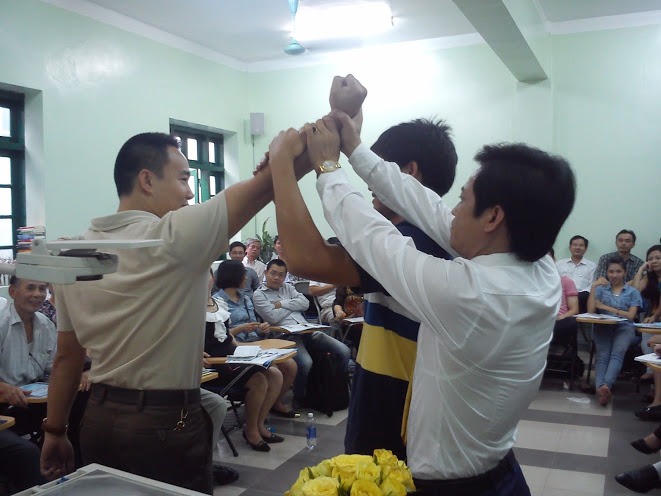
Under the Vietnam Federation of UNESCO Associations, the center trains special methods to improve health, prevent and support treatment of physical and mental issues, and provides training in learning methods, thinking, and applied psychology for communication, business, negotiation, and sales.
© 2026 Trị Bệnh Không Dùng Thuốc. All rights reserved.
Heal your spirit
Contact
Address: Cultural and Sports Center, Yen Phu Ward, No. 1/15, Alley 189 An Duong Street, Tay Ho District, Hanoi.
Hotline: 0904.606.965