


Colonel and Integrative Medicine Physician Shares His Experience in the “Clinical Hypnotherapy Specialist” Training Program
Dr. Bùi Quốc Trị, a Colonel and practitioner of both Traditional Eastern Medicine and Western Medicine, reflects on his experience in a unique professional training course.

Here is the exact English translation of your text, with original length preserved, additional context, and reference links added as requested.
---
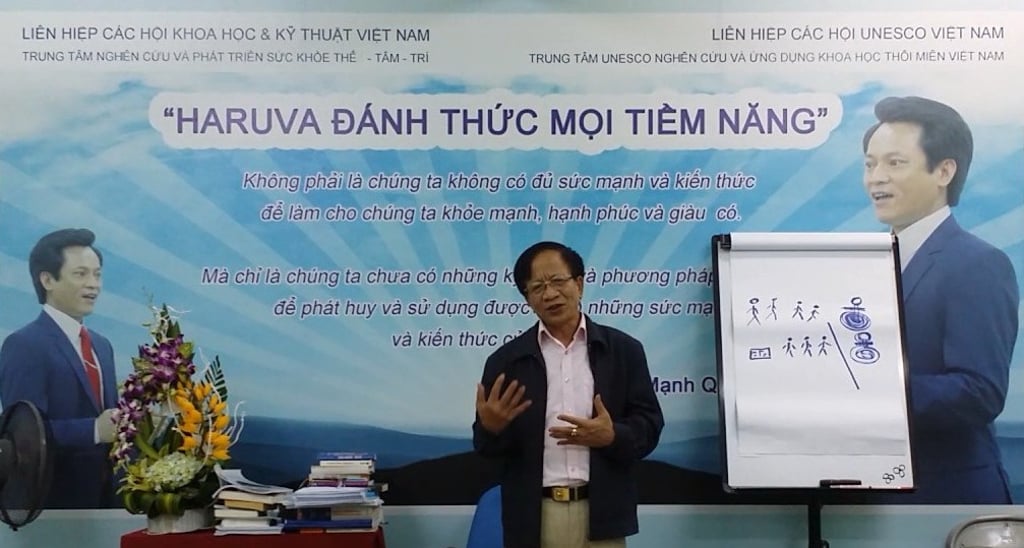
Colonel, Doctor Bui Quoc Tri, former Head of Department at the Institute of Traditional Military Medicine, has a practice background in both Western and Eastern medicine. After participating in the Therapeutic Hypnosis Expert course taught by Psychologist and Therapeutic Hypnotherapist Nguyen Manh Quan, he shared profound insights about non-pharmaceutical therapy methods, the mechanism of positive suggestion, mind-body impact, and the potential for application in health care.
From the perspective of a medically trained doctor who has worked in a military medical environment and has a foundation combining Eastern and Western medicine, Dr. Bui Quoc Tri views the course not only as a personal experience but as an approach worthy of attention in the fields of psychological therapy, hypnosis, and mind-body health support.
A very special non-pharmaceutical treatment method
Dr. Bui Quoc Tri shared that this is a very special course: a training program for experts in non-pharmaceutical treatment. According to him, this field is still new in Vietnam and not widely understood correctly.
He believes the center trained students in hypnotherapy, that is, applying hypnosis in therapeutic support. In this approach, the therapist does not use medication or medical instruments but uses words, positive suggestions, deep relaxation states, the client's cooperation, and psychological techniques to influence the nervous system, emotions, beliefs, body responses, and internal self-regulating ability.
Modern hypnotherapy should not be understood as something mysterious or a loss of control. It is a state of deep focus, relaxation, and increased responsiveness to suggestion when the client voluntarily cooperates. The NCCIH, part of the NIH, states that hypnosis has been studied in several contexts such as irritable bowel syndrome, pre-procedure anxiety, menopausal symptoms, headaches, PTSD, pain management, and smoking cessation; there is growing evidence that hypnosis can support the management of certain pain conditions, although the level of evidence and effectiveness varies by condition. (NCCIH) [https://www.nccih.nih.gov/health/hypnosis]
Positive suggestion and the mind-body mechanism
According to Dr. Bui Quoc Tri's sharing, in hypnotherapy, the therapist uses positive suggestions with the client's cooperation. Suggestion is not "commanding" or imposing. Therapeutic suggestions are messages constructed to guide the mind and body toward a safer, more relaxed, more balanced, and more positive state.
When a person is stressed, anxious, in pain, or afraid, the nervous system can be in a state of high alert. Muscles tense, breathing becomes shallow, heart rate increases, sleep becomes difficult, emotions fluctuate easily, and pain perception may increase. When guided into a deep relaxation state, the body can enter the "relaxation response" — a state characterized by slower breathing, lower blood pressure, and reduced heart rate, opposite to the stress response. NCCIH lists techniques such as progressive muscle relaxation, autogenic training, guided imagery, biofeedback, self-hypnosis, and breathing exercises as commonly used relaxation techniques. (NCCIH) [https://www.nccih.nih.gov/health/relaxation-techniques-what-you-need-to-know]
In that state, the therapist's words can help the client redirect attention, calm emotions, change internal images, reduce fear, and increase feelings of control. This is an important foundation for many mind-body therapy approaches.
The hypothalamic-pituitary-adrenal axis and the stress response
Dr. Bui Quoc Tri specifically mentioned the physiological mechanism related to the hypothalamus and the body's hormonal cascade. In modern medicine, the system often referenced in the stress response is the hypothalamic-pituitary-adrenal axis, or HPA axis.
When the body encounters stress, the brain and endocrine system coordinate to produce an adaptive response. In principle, the hypothalamus sends signals to the pituitary gland, the pituitary gland acts on the adrenal glands, and the adrenal glands release hormones such as cortisol to help the body cope with the stressful situation. This response is necessary in the short term, but if stress persists, the body can fall into a state of fatigue, insomnia, muscle tension, anxiety, or disruption of many mind-body functions.
Hypnotherapy, self-hypnosis, deep relaxation, slow breathing, visualization, and emotion regulation techniques can be understood as methods to help calm the stress response, assisting the body to return to a more balanced state. This is not a replacement for medical treatment but a complementary direction to help learners understand and regulate the connection between mind, nervous system, endocrine system, emotions, and body.
Dr. Bui Quoc Tri's demonstration therapy experience
During the course, Dr. Bui Quoc Tri received therapy as a demonstration subject in front of the class by Expert Nguyen Manh Quan. He shared that he had suffered from neurodermatitis since 1976, treated with both Western and Eastern medicine but had not recovered as desired.
Being directly treated in front of the class allowed him to observe the method from both perspectives: as a therapy recipient and as a doctor. He observed positive changes in his condition, which further increased his interest in the mechanism and applicability of hypnotherapy.
For dermatological, neurological, immune, or chronic conditions, it is important to understand cautiously that causes can be complex and require specialist medical evaluation. However, stress, emotions, sleep, and nervous system state can affect sensations of itching, pain, discomfort, and symptom tolerance. Relaxation and stress-regulation methods can play a supportive role in overall care.
From scientific skepticism to practical observation
As a doctor, Dr. Bui Quoc Tri did not accept the method based on belief alone. He shared that with his natural curiosity, he personally investigated several cases that had been supported pro bono by Expert Nguyen Manh Quan, including a patient with end-stage liver cancer, patients with depression, essential hypertension, diabetes, thyroid disorders, spinal conditions, benign prostatic hyperplasia, uterine fibroids, breast tumors, and many other issues.
From his observation and investigation, he concluded that psychological therapy and hypnosis methods produced notable results. The appropriate scientific framing is to view these as observational cases and personal feedback, valuable for generating hypotheses, but not a substitute for controlled clinical research, independent diagnosis, and long-term follow-up.
What is important is that these observations suggest hypnotherapy and mind-body methods deserve serious investigation, cautious application, and further research in the context of treatment support, stress reduction, quality of life improvement, and enhancing patient cooperation in therapy.
The placebo effect and the role of therapeutic belief
Dr. Bui Quoc Tri also mentioned the placebo effect. In medicine, placebo is not simply "imagination" or "nothing." The placebo effect shows that expectations, beliefs, therapeutic context, the relationship with the practitioner, and how the brain predicts outcomes can influence symptom perception, especially pain, anxiety, and certain subjective manifestations.
NCCIH describes the placebo effect as a complex phenomenon in which the body's response can be influenced by expectations, conditioning, beliefs, and treatment context; this mechanism does not mean the patient is "faking" but reflects the brain and body's ability to respond to therapeutic signals. (NCCIH) [https://www.nccih.nih.gov/health/placebo-effects]
In hypnotherapy, the therapist can enhance similar positive factors: building trust, helping the client feel safe, creating reasonable expectations, guiding the body to relax, using therapeutic language, and encouraging the client to actively participate in the self-regulation process. When combined appropriately with modern medicine or Eastern medicine, these factors can support patients' mental state, emotions, and quality of life.
Hypnotherapy is not opposed to Western or Eastern medicine
An important point in Dr. Bui Quoc Tri's reflection is that hypnotherapy does not necessarily oppose Western or Eastern medicine. Rather, this method can play a supportive role.
Western medicine has strengths in diagnosis, emergency care, surgery, medication, laboratory tests, medical imaging, and treatment of organic diseases. Eastern medicine has strengths in holistic regulation, long-term care, recovery, and viewing the body as a balanced system. Hypnotherapy and mind-body methods can add an additional layer: working with stress, emotions, beliefs, nervous system state, patient cooperation, and self-regulating ability.
A patient undergoing Western or Eastern medical treatment should not stop medication, abandon their treatment protocol, or delay necessary intervention on their own. However, they can learn additional relaxation methods, self-hypnosis, slow breathing, visualization, stress reduction, and positive suggestion to support their mental state, sleep, pain perception, and quality of life.
Explaining special phenomena in scientific language
Dr. Bui Quoc Tri shared that the course also helped him better understand the mechanisms of certain phenomena such as "spirit mediumship" or extraordinary actions that ordinary people have not yet developed.
These phenomena can be viewed from multiple angles: culture, belief systems, psychology, altered states of consciousness, suggestion, hypnosis, dissociation, collective emotion, belief, and mind-body responses. A scientific approach does not deny subjective human experience but distinguishes between experience, interpretation, and evidence.
In states of deep focus, strong emotion, intense belief, or ritual contexts, humans may demonstrate unusual pain tolerance, emotional shifts, behavioral changes, or extraordinary mobilization of energy. Hypnotherapy provides a practice framework to partially understand these phenomena in psychological-neurological-bodily language, rather than viewing them solely as mysteries.
Faith, meaning in life, and resilience
Dr. Bui Quoc Tri also mentioned cases of patients with strong religious faith who experienced unexpected health improvements. In medicine and psychology, belief, meaning in life, hope, spiritual support, and community can greatly influence how patients face illness.
This does not mean faith can replace medical treatment. But faith can change psychological state, reduce loneliness, increase hope, improve tolerance, and help patients cooperate better with the treatment process. For many people, faith becomes a very powerful internal resource during illness.
Hypnotherapy works on a similar principle: when a person has positive imagery, a sense of safety, belief in their ability to recover, and a deep relaxation state, the body may respond differently to stress and symptoms.
Lessons from military medicine and the role of psychologist doctors
In his sharing, Dr. Bui Quoc Tri recounted a conversation with Colonel, Doctor Nguyen Huu Trung, who studied medicine in the former Soviet Union and worked in the field of burn treatment. He mentioned that in certain serious disasters, patients or victims may need early contact with psychologist doctors, because the mental factor greatly influences survival responses, treatment cooperation, and recovery.
This aligns well with modern medicine: in trauma, burns, natural disasters, war, accidents, or serious illness, mental health is an important part of comprehensive care. Patients need not only medication and surgery; they also need a sense of safety, orientation, mental support, panic reduction, and the belief that they are being cared for.
Hypnotherapy, in the hands of properly trained professionals with ethical standards, can be a supportive tool for reducing anxiety, reducing pain, supporting relaxation, and increasing treatment cooperation in appropriate contexts.
The "Igniting a New Vitality" course for the community
In addition to the expert training course, Dr. Bui Quoc Tri also mentioned the community health course "Igniting a New Vitality," which runs for approximately 2.5 days. In this course, students learn self-care and self-therapy methods for common issues, including chronic conditions.
The spirit of the course is to help students mobilize the inherent abilities within their bodies to prevent illness, increase resilience in mental and physical labor, live more happily, more optimistically, reduce tension, and reduce stress.
The methods taught may include self-hypnosis, deep relaxation, positive suggestion, EFT, M.E.T, slow breathing, visualization, and emotion recognition. These methods give students additional tools for daily self-care, especially for issues related to stress, insomnia, pain, anxiety, fatigue, and negative emotions.
From "treating" to "accompanying recovery"
Modern language needs to be careful. Rather than understanding hypnotherapy as "curing all diseases," it should be understood as a method of accompanying recovery.
Accompanying recovery means helping the patient or learner:
- Understand their body better
- Recognize stress and emotions better
- Know how to relax and return to a calm state
- Know how to use positive language with their body
- Know how to reduce fear responses to symptoms
- Know how to improve sleep and self-confidence
- Know how to combine mind-body methods with medical care when needed
- Know how to be more proactive rather than completely passive in the face of illness
When understood correctly, hypnotherapy does not weaken medicine but can add an important dimension: the dimension of mind, emotions, beliefs, nervous system state, and self-regulating ability.
Excerpt from Colonel, Doctor Bui Quoc Tri's reflection
"I would like to share my reflections on a very special course that I attended. A training program for experts in non-pharmaceutical treatment."
"This center taught students the subject of Hypnotherapy, following the training program for doctors in Europe."
"The doctor, the therapist, by using positive suggestions, with the patient's cooperation, acts upon the client's hormonal cascade."
"During the course, I was treated by the Teacher as a demonstration subject in front of the whole class and had very positive results."
"I truly believe in this treatment method and hope that our Vietnamese health sector will soon research, learn, and apply it."
"This center also opens a community health class called 'Igniting a New Vitality'... students learn self-therapy methods for some common conditions."
The value of the Therapeutic Hypnosis Expert course
The Therapeutic Hypnosis Expert course does not only teach techniques for guiding clients into hypnotic states. A serious training program must help students understand therapeutic ethics, professional boundaries, client safety, constructing therapeutic suggestions, listening, problem assessment, recognizing cases requiring referral for medical or intensive psychological treatment, and coordinating with other health care methods when necessary.
For those with backgrounds in medicine, psychology, education, health care, or therapy, hypnotherapy can expand the view of human beings: not only as organs, symptoms, and lab results, but as mind-body systems with memories, emotions, beliefs, living environments, and self-regulating abilities.
Scientific and safety note
The content of this article represents the personal reflections and professional observations of Colonel, Doctor Bui Quoc Tri after the course. The cases mentioned are personal experiences, feedback, or observations, not clinical evidence to guarantee identical results for everyone.
Hypnotherapy, self-hypnosis, EFT, M.E.T, deep relaxation, positive suggestion, and mind-body methods can support stress reduction, emotion regulation, sleep improvement, pain perception, and quality of life in some individuals. These methods do not replace medical examination, diagnosis, medication, surgery, emergency care, cancer treatment, psychiatric treatment, endocrine treatment, or intensive medical intervention when necessary.
People with cancer, diabetes, thyroid disorders, hypertension, cardiovascular disease, severe depression, self-harm thoughts, psychosis, chronic pain of unknown cause, or serious medical conditions should be monitored by specialist doctors. Do not stop medication, discontinue treatment, or delay medical intervention for any complementary method.
Course information
Course: Therapeutic Hypnosis Expert
Orientation: Hypnotherapy, suggestion therapy, self-hypnosis, applied psychological therapy, mind-body support, techniques for working with the subconscious and emotions
Instructor: Hypnosis Expert Nguyen Manh Quan
Suitable for: Professionals in therapy, psychology, education, health care, coaching, counseling, human development, and students who want to seriously study hypnotherapy
Related community course: Haruva – Igniting a New Vitality
Hotline: 0904.606.965
Email: nmq.tribenhkhongdungthuoc@gmail.com
References
- National Center for Complementary and Integrative Health (NCCIH). Hypnosis. https://www.nccih.nih.gov/health/hypnosis
- National Center for Complementary and Integrative Health (NCCIH). Relaxation Techniques: What You Need To Know. https://www.nccih.nih.gov/health/relaxation-techniques-what-you-need-to-know
- National Center for Complementary and Integrative Health (NCCIH). Placebo Effects. https://www.nccih.nih.gov/health/placebo-effects
Under the Vietnam Federation of UNESCO Associations, the center trains special methods to improve health, prevent and support treatment of physical and mental issues, and provides training in learning methods, thinking, and applied psychology for communication, business, negotiation, and sales.
© 2026 Trị Bệnh Không Dùng Thuốc. All rights reserved.
Heal your spirit
Contact
Address: Cultural and Sports Center, Yen Phu Ward, No. 1/15, Alley 189 An Duong Street, Tay Ho District, Hanoi.
Hotline: 0904.606.965